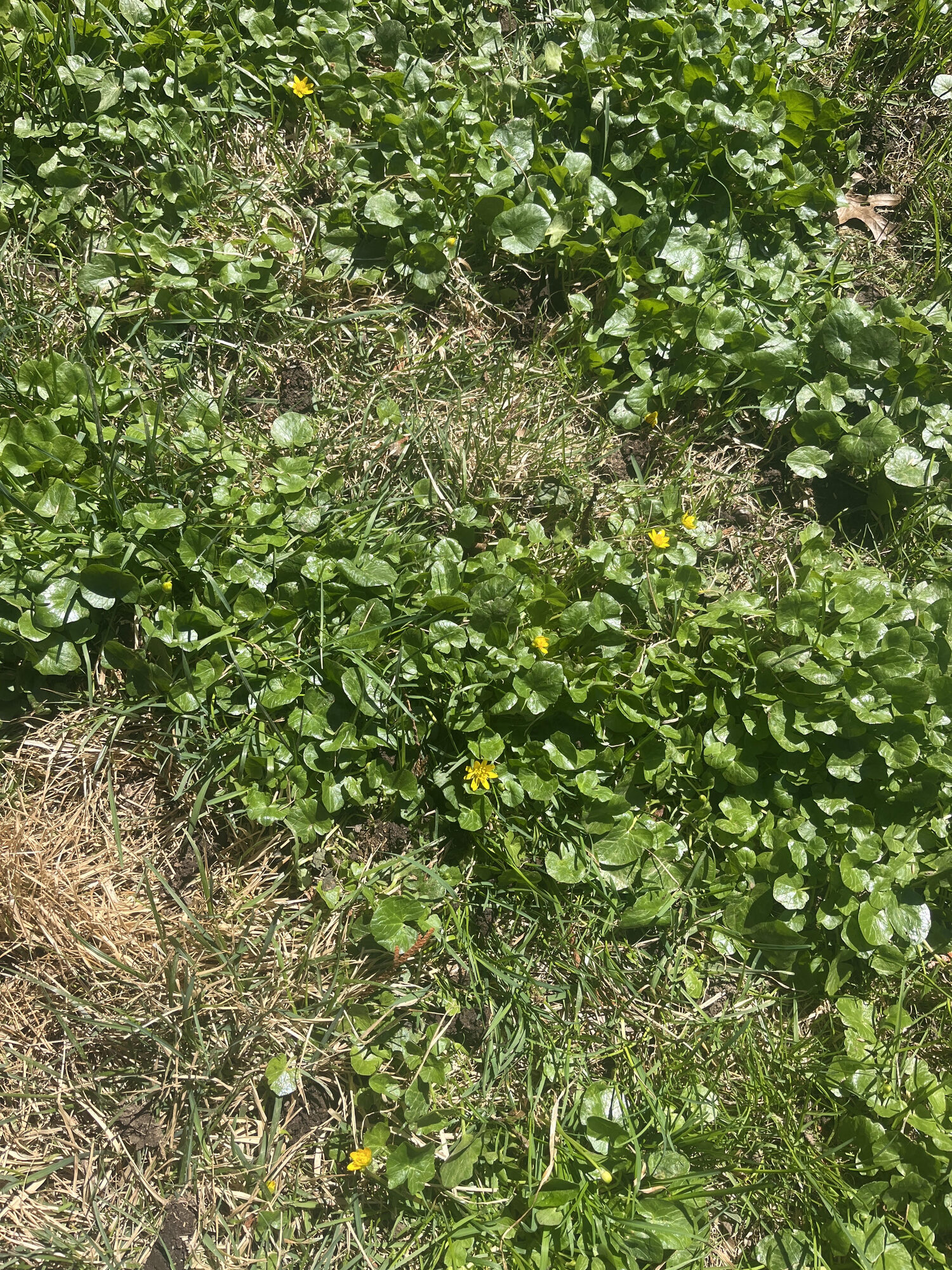
"Fig buttercup" usually refers to Lesser Celandine, an invasive spring weed with shiny yellow flowers and glossy heart-shaped leaves. It often pops up in lawns, damp garden beds, wooded edges, and low spots in early spring.
It spreads for a few key reasons: it grows from underground tubers and small bulblets left in the soil from previous seasons, it thrives in moist, compacted, shaded areas where turf or other plants are thin, and it emerges very early in spring before lawns fully wake up, giving it a competitive advantage. Disturbed soil, or moving contaminated mulch or fill dirt, can also spread it to new areas.
One reason it's difficult to control is that even tiny underground pieces can regrow into new plants. By late spring or early summer, the plant usually dies back and disappears above ground, but the tubers remain underground until the next season. In Connecticut, it's especially common in wet spring conditions and can spread aggressively through lawns and landscape beds if left unmanaged.
To help prevent it: improve drainage and reduce overly wet areas, keep lawns thick and healthy, mulch beds properly to reduce open soil, remove plants before they produce bulblets, and avoid moving contaminated soil into clean areas. For established infestations, selective herbicide treatment is usually most effective in late winter to early spring while the leaves are actively growing.