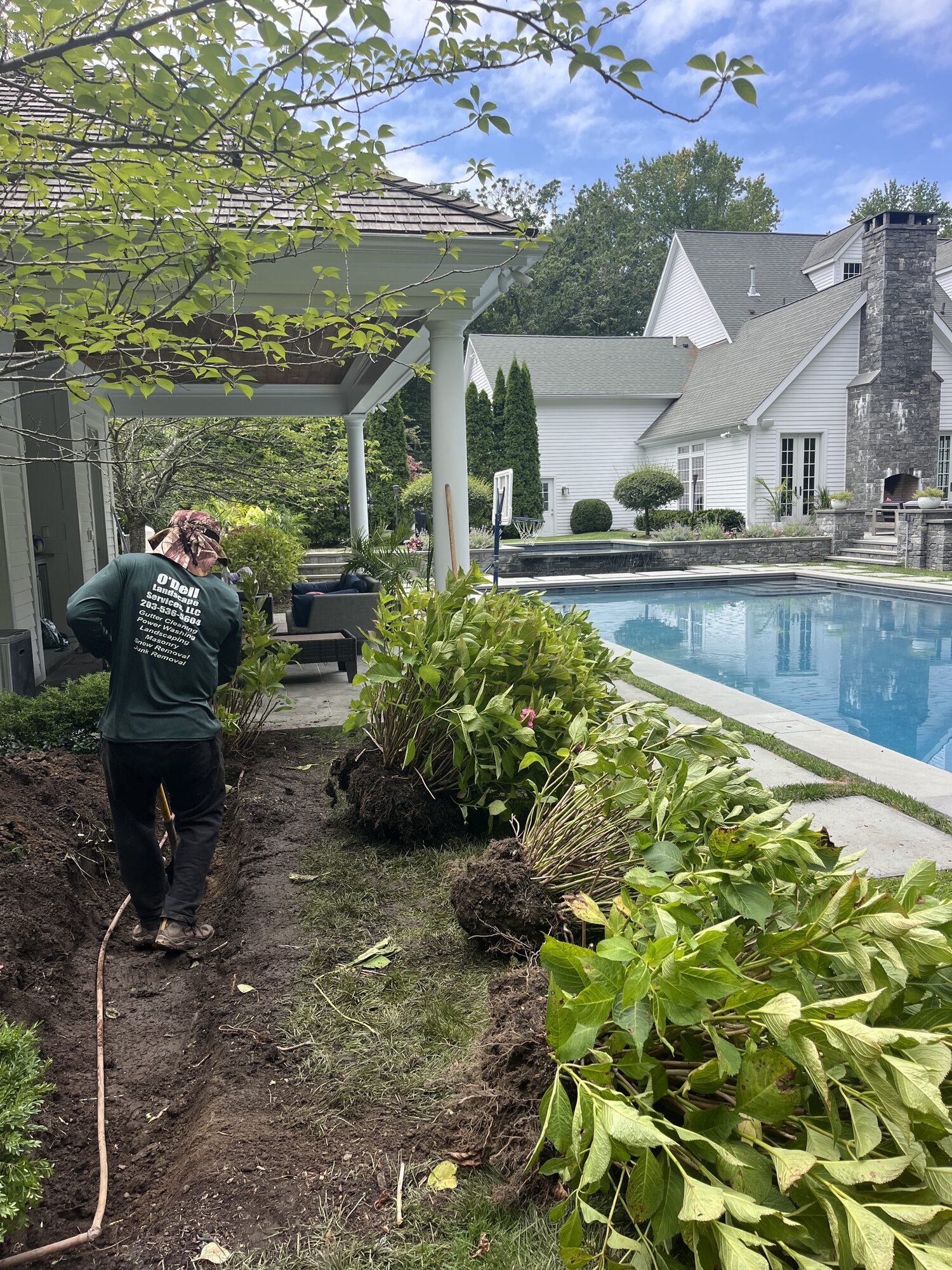
Keeping the root ball large during transplanting is important because it protects the plant's root system and helps reduce transplant shock. Most trees, shrubs, and perennials rely on thousands of small feeder roots near the outer edge of the root zone to absorb water and nutrients. If too many of these roots are cut off during digging, the plant can struggle to establish itself in its new location.
A larger root ball helps the plant retain more moisture during the move, maintain better nutrient uptake, stay more stable after planting, recover and establish faster, and reduce stress, wilting, and dieback. This is especially important for evergreens, mature shrubs, and larger trees, which can take longer to regenerate lost roots. Preserving as much of the existing soil around the roots as possible also protects beneficial microbes and minimizes disturbance to the plant's natural growing environment.
Planting depth matters just as much as root ball size. When part of a tree's root ball sits above the ground, the exposed roots and soil dry out much faster from sun and wind exposure - in hot weather, the top of an exposed root ball can become almost hydrophobic, causing water to run off instead of soaking in evenly. An exposed root ball can also lead to instability, since trees rely on surrounding soil to anchor themselves while new roots grow outward.
That said, planting too deep is usually worse than slightly high. The trunk flare - where the trunk widens into roots - should remain visible slightly above grade. Ideally, the top of the root ball sits about 1–2 inches above surrounding soil, then mulch is feathered around it without burying the trunk.
Spring and fall are the ideal seasons for transplanting because temperatures are milder, but summer transplanting can still succeed with the right care. Trees and shrubs moved in summer should be dug with as much of the root ball intact as possible and watered deeply before, during, and after transplanting - soaking the root ball thoroughly two to three times per week rather than lightly every day. Moving them on a cool, cloudy day or in the evening also helps reduce transplant shock. Applying a 2–3 inch layer of mulch around the base helps regulate soil temperature and retain moisture, but keep it a few inches away from the trunk to prevent rot, and avoid fertilizing immediately after transplanting since the plant's energy should go toward establishing roots rather than new growth. Perennials are more forgiving in summer, but still benefit from being cut back slightly to reduce water loss, and annuals can usually be transplanted throughout the summer as long as they're watered well.