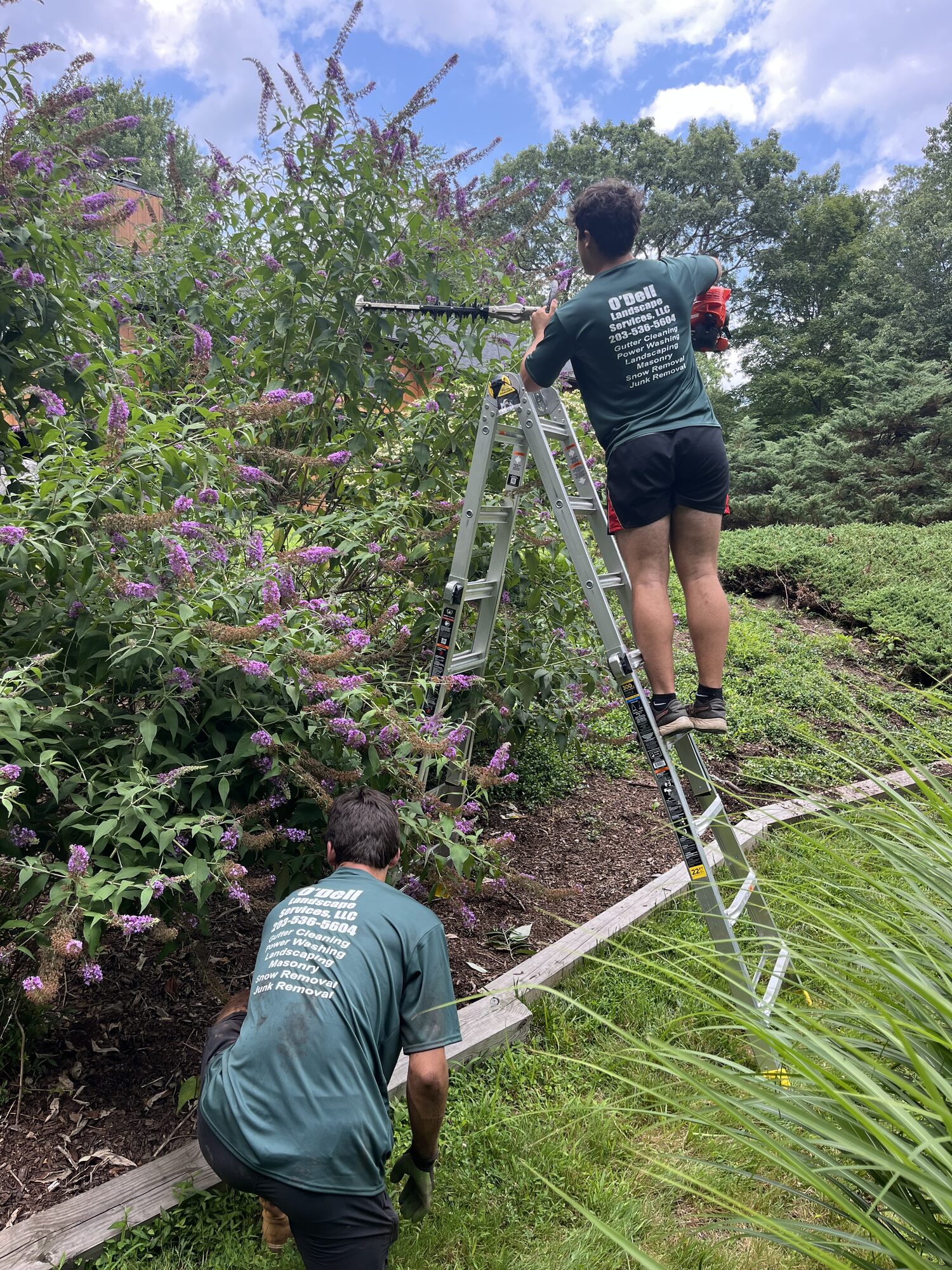
Pruning is important because it helps plants stay healthy, safe, and visually appealing. Removing dead, diseased, or damaged branches improves air circulation and sunlight penetration, which can reduce the risk of fungal diseases and pest problems. It also encourages stronger new growth and can improve flowering, fruit production, and overall plant structure. For ornamental shrubs and trees, pruning helps maintain shape and size so plants don't become overgrown or interfere with walkways, siding, roofs, or utility lines.
Different plants benefit from pruning at different times of year - many spring-flowering shrubs should be pruned shortly after they bloom, while many shade trees are best pruned during dormancy. Proper technique matters too: making clean cuts in the right locations helps plants heal more effectively and prevents unnecessary stress.
Hedges have their own set of rules. Regular trimming encourages new branching, improves airflow and sunlight penetration, and prevents plants from becoming overgrown. One of the most important principles is maintaining a hedge that's slightly wider at the bottom and narrower at the top, so sunlight can reach the lower branches - without this shape, the bottom of a hedge can thin out and develop bare spots that take years to recover.
Most hedges should be trimmed in spring and lightly maintained through summer while actively growing. Heavy trimming in late fall should usually be avoided, since it can stimulate tender new growth that gets damaged by winter weather. Fast-growing hedges may need trimming several times a year, while slower-growing plants like boxwoods or hollies typically need less.
The right tools make a real difference. Hedge shears work well for precision shaping, electric hedge trimmers are best for efficiency on larger hedges, and hand pruners and loppers should be used for thicker interior branches instead of forcing hedge trimmers through woody growth. When trimming, make light, consistent cuts and avoid removing more than about one-third of the plant at a time - overcutting can expose dead interior growth and leave permanent brown patches.