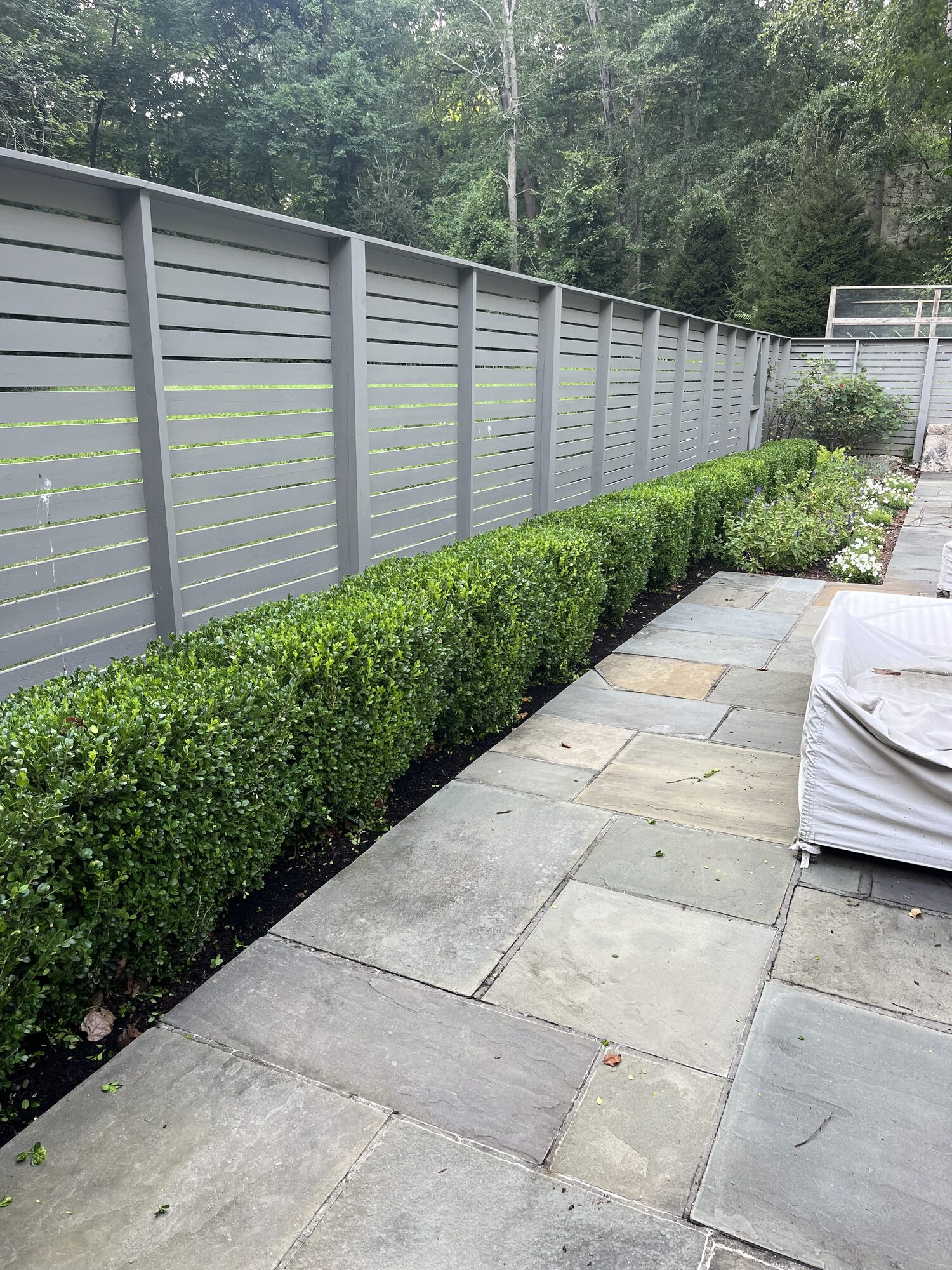
Boxwoods are widely used in the Northeast because they stay evergreen and tolerate pruning well, but the region's climate also creates ideal conditions for several diseases and stress problems. A few major factors make them especially vulnerable.
Humid summers create perfect conditions for fungal diseases like boxwood blight and volutella blight - moisture sitting on leaves for long periods allows spores to spread quickly, especially in dense hedges with poor airflow. Dense growth and poor air circulation compounds this: boxwoods are often planted tightly together or heavily sheared into formal shapes, which traps humidity inside the shrub and reduces sunlight penetration into the interior branches.
Wet soil and poor drainage is another major factor - boxwoods dislike "wet feet," and many Northeast properties have heavy clay soils or compacted areas that hold water after rain or snowmelt, weakening roots and increasing susceptibility to root rot diseases like phytophthora. Freeze-thaw cycles add further stress, as repeated swings between mild and extremely cold temperatures cause winter burn, stem cracking, and overall weakened health.
Salt exposure from road salt and deicing products is common in Connecticut and surrounding states, and can burn foliage, alter soil chemistry, and weaken root systems, particularly for foundation plantings near driveways or sidewalks. Overhead watering from frequent sprinkler irrigation keeps foliage wet and encourages fungal spread - drip irrigation or deep root watering is much healthier. And because many landscapes rely heavily on one type of boxwood, monoculture planting lets disease spread rapidly through an entire property or neighborhood once it takes hold.
Some of the most common issues we see in the region include boxwood blight, volutella blight, root rot, winter burn, boxwood leafminer, and box tree moth (an emerging concern in parts of the Northeast). To reduce disease risk: space plants properly for airflow, avoid overhead watering, improve drainage before planting, mulch moderately to regulate soil moisture, thin interiors occasionally instead of constant tight shearing, remove fallen leaves and infected debris, and choose more resistant cultivars when possible. In Connecticut landscapes, the healthiest boxwoods are usually the ones planted with good airflow, morning sun, and well-drained soil, rather than tightly packed into shaded foundation beds.