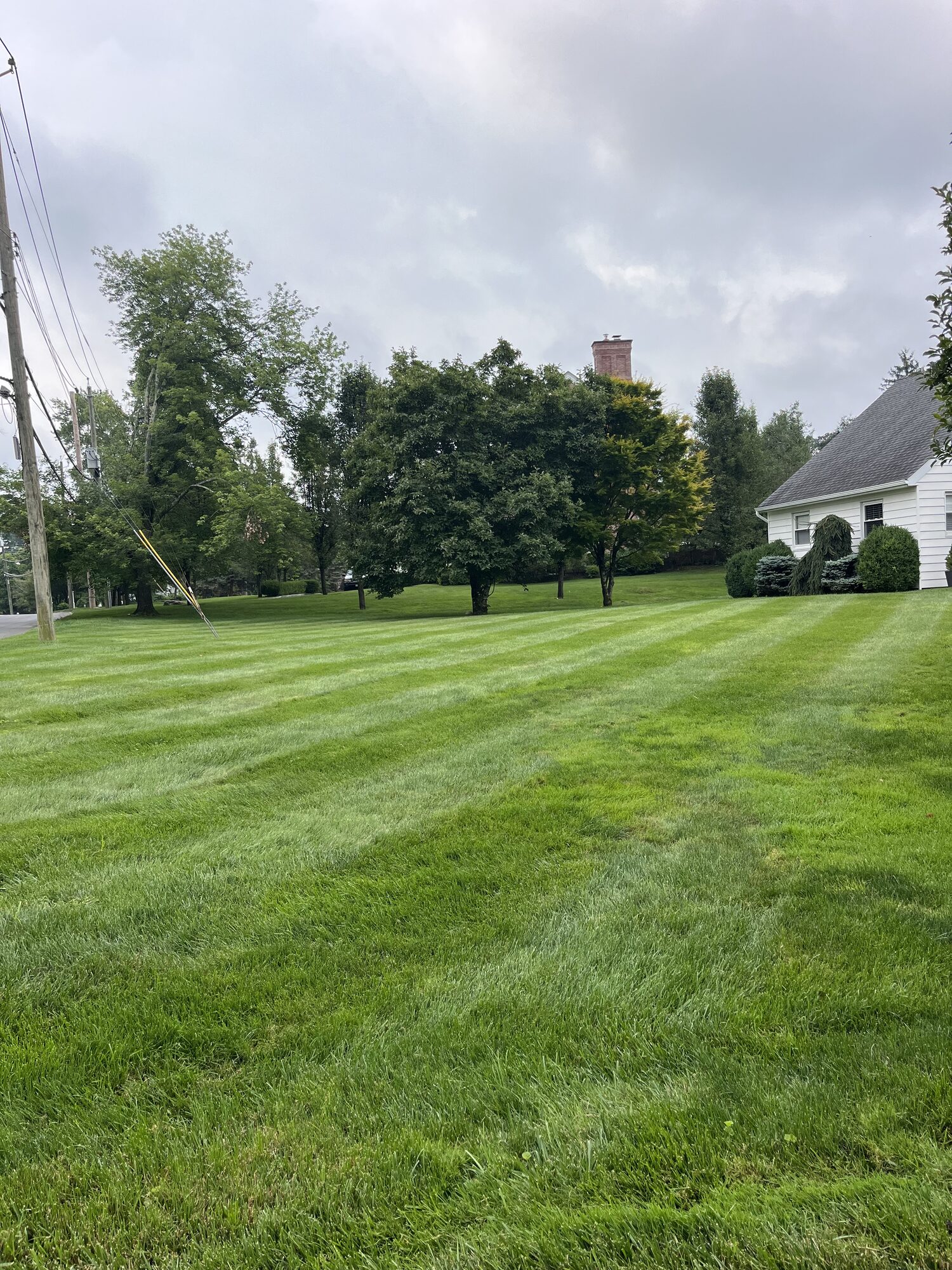
Fall is the ideal time to establish a new lawn, especially for the cool-season grasses common in Fairfield and Westchester Counties, like Kentucky bluegrass, fescue, and perennial ryegrass. Soil that's still warm from summer combined with cooler air temperatures creates an ideal germination window, while weed pressure drops off sharply compared to spring - meaning new grass has far less competition while it's trying to establish.
A properly prepared seedbed with quality topsoil helps ensure good seed-to-soil contact, improves moisture retention, and provides the nutrients young grass plants need to thrive.
Quality topsoil is one of the most important parts of establishing a healthy new lawn because it creates the foundation that grass roots depend on. Good topsoil contains the right balance of nutrients, organic matter, air space, and drainage to help seed germinate quickly and develop deep, strong roots. When poor soil is used instead, new lawns often struggle with thin growth, patchy areas, standing water, compaction, and increased weed pressure - low-quality fill dirt may lack nutrients, contain excessive clay or rocks, or dry out too quickly, making it difficult for grass to establish evenly.
The key to a successful fall lawn is proper preparation and care. Soil should be loosened and graded before seeding, and the newly seeded area should be kept consistently moist until germination is complete. Cooler fall temperatures mean less water is lost to evaporation and less heat stress on tender new seedlings than a spring seeding faces heading into summer. With the right foundation and regular watering, a fall-seeded lawn spends the rest of autumn and winter dormancy building a deep root system - setting it up to come back thick, green, and ready for the growing season the moment spring arrives.