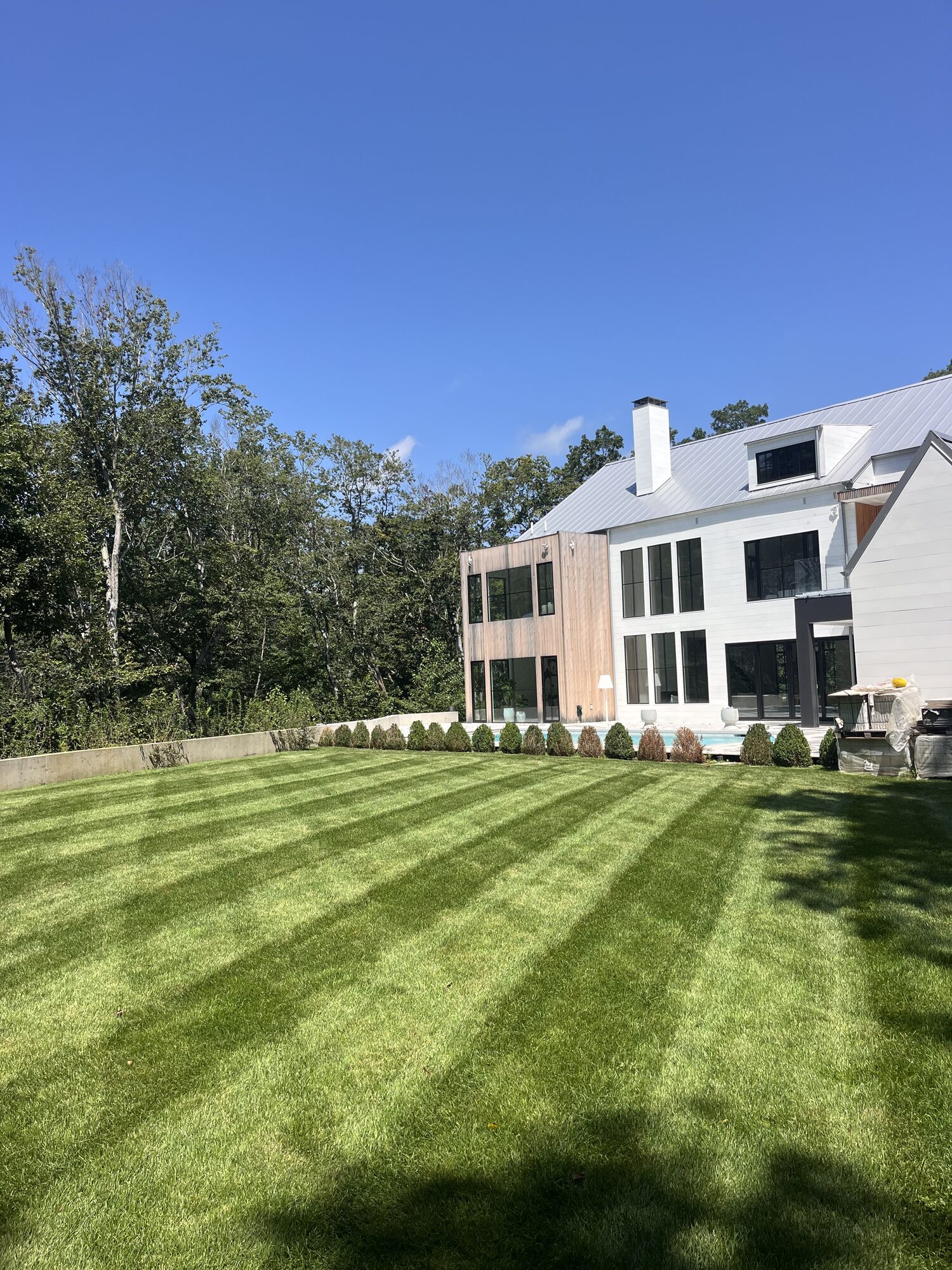
Planting sod is one of the fastest ways to achieve a lush, healthy lawn. Unlike seeding, sod provides an instant transformation while helping to prevent soil erosion and reduce weed growth. With proper site preparation - including grading, adding quality topsoil when needed, and ensuring good soil-to-root contact - sod can establish quickly and develop into a durable, attractive lawn.
The key to success after installation is consistent watering. Newly laid sod requires frequent irrigation to keep the root zone moist as it begins to knit into the soil beneath it. Within a few weeks, the roots establish, creating a thick, vibrant lawn that enhances curb appeal right away.
Seeding, on the other hand, costs less and gives you more variety in grass type, but takes far longer to establish and needs more careful aftercare in the early weeks (see our guide on caring for a lawn in the weeks after seeding). Sod is usually the better choice when you need an established lawn fast - after construction, a dead patch, or a full renovation - while seed makes sense for larger areas or budget-conscious projects where you have a full season to let the lawn establish.