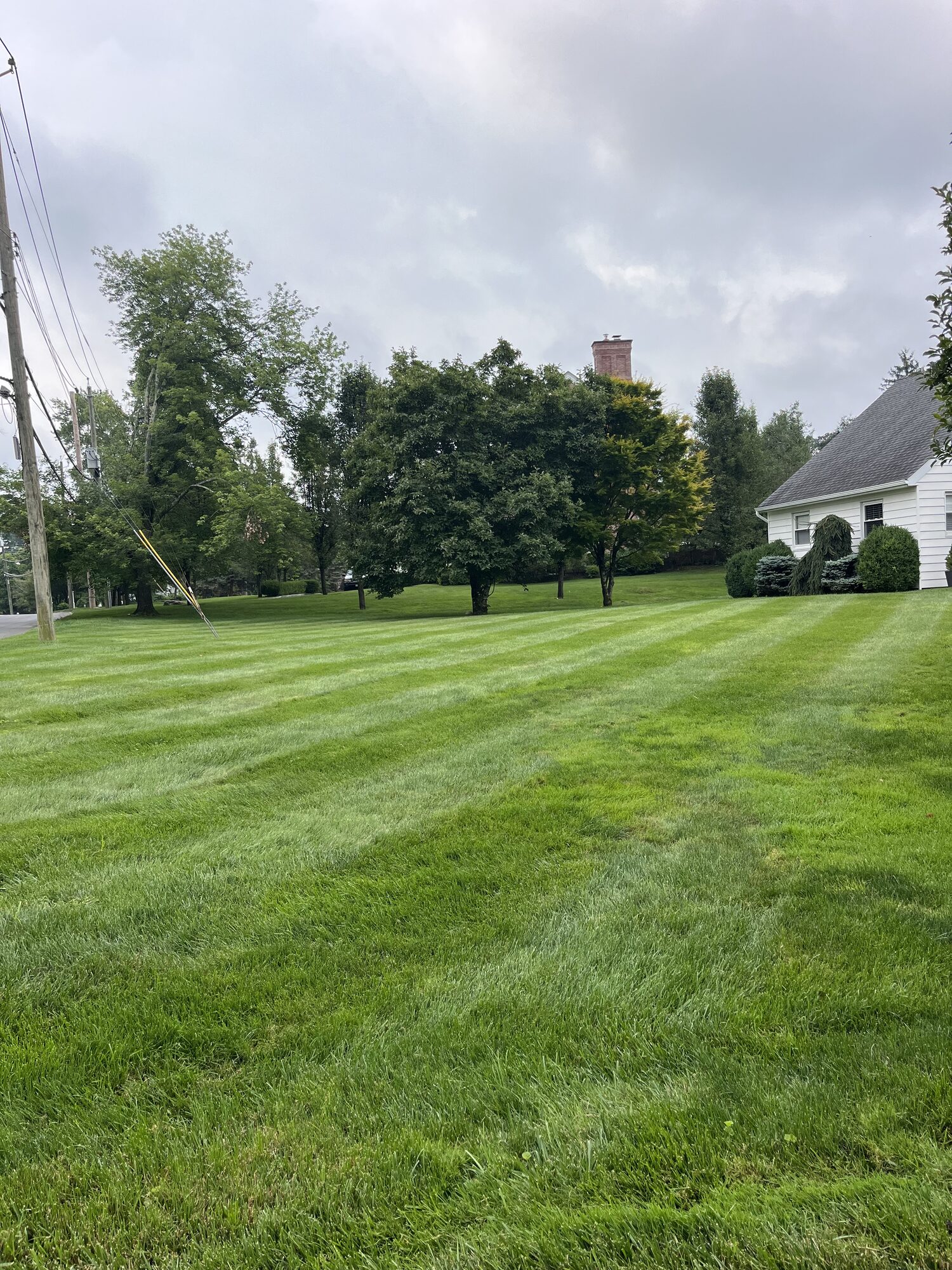
After seeding a new lawn, the first few weeks are critical. Proper watering and limiting traffic will have the biggest impact on success.
1. Keep the soil consistently moist. Water lightly 2–4 times per day for the first 2–3 weeks, depending on weather. The goal is to keep the top ½ inch of soil moist without creating puddles. Once the grass has germinated and reached 2–3 inches tall, transition to deeper, less frequent watering to encourage deeper roots.
2. Stay off the lawn. Avoid foot traffic, pets, and equipment as much as possible. Young seedlings are easily damaged and can be uprooted before establishing roots.
3. Watch for erosion. Heavy rain can wash away seed and topsoil. Straw, erosion-control blankets, or peat moss can help protect newly seeded areas on slopes.
4. Mow at the right time. Wait until the grass reaches about 3–4 inches tall. Use a sharp mower blade and never remove more than one-third of the blade height in a single mowing.
5. Fertilize appropriately. If a starter fertilizer was applied during seeding, additional fertilizer usually isn't needed for 4–6 weeks. After establishment, a balanced fertilizer can help encourage continued growth.
6. Control weeds carefully. Avoid most weed-control products until the new lawn has been mowed at least 3–4 times - many herbicides can damage young grass seedlings.
7. Be patient. Different grasses germinate at different rates. Perennial ryegrass may sprout in 5–10 days, while Kentucky bluegrass can take 2–4 weeks or longer. Full establishment often takes an entire growing season.
For lawns in Connecticut, spring and early fall seedings typically benefit from about 1–1.5 inches of water per week after establishment, but newly seeded lawns require much more frequent watering until roots develop.